3 new email metrics that you need in 2026
3 new email metrics that you need in 2026

{
“@context”: “https://schema.org”,
“@type”: “AnalysisNewsArticle”,
“headline”: “3 new email metrics that you need in 2026”,
“description”: “This analysis identifies three emerging email performance indicators—Engagement Velocity, AI-Prompt Attribution, and Predicted Lifetime Value—that are replacing traditional open and click-through rates in the age of privacy-centric marketing.”,
“datePublished”: “2026-03-26T08:00:00-05:00”,
“dateModified”: “2026-03-26T08:00:00-05:00”,
“author”: {
“@type”: “Person”,
“name”: “Constantine von Hoffman”,
“jobTitle”: “Managing Editor”,
“url”: “https://martech.org/author/constantine-von-hoffman/”,
“sameAs”: [
“https://www.linkedin.com/in/constantine-von-hoffman-7789911/”
]
},
“publisher”: {
“@type”: “Organization”,
“name”: “MarTech”,
“logo”: {
“@type”: “ImageObject”,
“url”: “https://martech.org/wp-content/themes/martech/library/images/mt-logo.png”
}
},
“mainEntityOfPage”: {
“@type”: “WebPage”,
“@id”: “https://martech.org/3-new-email-metrics-that-you-need-in-2026/”
},
“speakable”: {
“@type”: “SpeakableSpecification”,
“cssSelector”: [
“h1”,
“.article-content p:first-of-type”
]
},
“backstory”: “This analysis is based on a synthesis of recent 2026 email deliverability studies and expert interviews with CRM platform lead engineers regarding the technical limitations of legacy tracking pixels.”
}
For years, email performance has been measured with a familiar set of metrics: opens, clicks and conversions.
But those numbers are becoming less useful — not just because of privacy changes, but because mailbox providers (MBPs) are now judging emails the way users do: based on engagement, trust and intent.
That shift is forcing marketers to rethink how they measure success.
A new report from Validity points to three emerging metrics that are likely to go mainstream in 2026 — and they say more about subscriber relationships than traditional KPIs ever could.
1. Disaffection index signals when audiences are tuning out
The first metric flips the usual performance mindset on its head.
Instead of focusing on positive engagement, the disaffection index measures the signals that indicate an audience is losing interest — combining unsubscribes, complaints and bounces into a single metric.
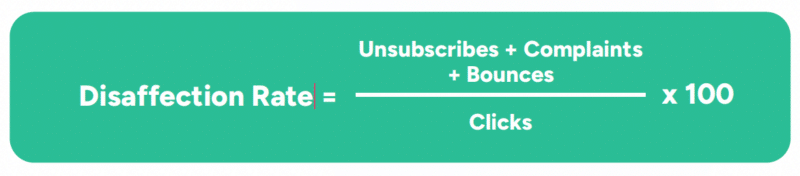
In other words, it answers a question most dashboards ignore: How quickly are you burning through your audience?
This matters because inbox providers increasingly treat negative signals as stronger indicators than positive ones. A campaign with decent click rates can still hurt deliverability if it generates enough complaints or unsubscribes.
The takeaway for marketers is straightforward: optimizing for clicks alone isn’t enough. Sustained performance depends on minimizing friction and fatigue over time.
2. Reply rate is the real measure of engagement
Clicks can be accidental. Opens are often unreliable. Replies, on the other hand, require intent.
That’s why reply rate is emerging as a key engagement signal. In the report’s example, even a 1% reply rate represents a meaningful level of audience investment — these are subscribers who cared enough to respond.

Mailbox providers increasingly interpret this kind of interaction as a strong trust signal. Emails that invite and generate replies are more likely to be seen as relevant — and placed in the inbox accordingly.
This has practical implications for email strategy. Campaigns are starting to look less like broadcasts and more like conversations, with prompts for feedback, questions or direct responses built into the content.
It also introduces operational challenges. As reply volume grows, more teams are turning to automation or AI agents to manage responses at scale — effectively blending email marketing with customer support.
3. Quantifying trust
“Build trust” has long been a marketing cliché. What’s changing is the attempt to measure it.
The report outlines a framework for trustworthiness that combines credibility, reliability and intimacy, adjusted by how self-focused a brand appears.

While subjective, these components map closely to how subscribers evaluate emails:
- Credibility: Does this sender know what they’re talking about?
- Reliability: Do they consistently follow through?
- Intimacy: Do I feel safe engaging with them?
- Self-orientation: Is this about me, or just them?
The challenge is turning these into actionable metrics. Suggested approaches include tracking replies, monitoring complaint rates, encouraging preference updates and actively collecting feedback.
What’s notable is that trust can move in both directions — and negative signals often carry more weight.
The SEO toolkit you know, plus the AI visibility data you need.

@media (max-width: 768px) {
.headline-responsive {
font-size: 30px !important;
line-height: 1.3 !important;
}
}
Shifting from campaign metrics to relationship metrics
Taken together, these three metrics reflect a broader change in email marketing.
Performance is no longer just about what happens immediately after a send. It’s about how recipients perceive and interact with a brand over time.
That aligns with how mailbox providers now filter inboxes. Engagement isn’t just measured — it’s interpreted. And the signals they prioritize increasingly resemble relationship health, not campaign performance.
For marketers, that means success is becoming harder to game.
And that’s probably the point.
Validity 2026 Email Benchmark Report link. (Registration required)
The post 3 new email metrics that you need in 2026 appeared first on MarTech.
⚡ Hot Amazon & Walmart Deals
Discover exclusive discounts from Amazon and Walmart – shop trending products and save big today.
🎮 MMO & AI Tools – Earn Online Smarter
Join the MMO community and explore powerful AI tools designed to maximize your online income.
💼 Affitor Pro & AI Side Hustles
Leverage AI to generate smarter profits and build sustainable passive income streams.
🚀 Hosting & Tutorials
Learn how to build profitable websites fast with Hostinger tutorials and AI‑powered strategies.