SEO Guide for SaaS Companies
SEO Guide for SaaS Companies
Key Takeaways
- SaaS SEO requires a strategy built for long sales cycles and global competition.
- Map your content to every stage of the buyer journey, from awareness-stage blog posts to decision-stage case studies and comparison pages.
- AI search has reshaped how buyers research software, with 51 percent of B2B software buyers now starting with an AI chatbot more often than Google. That means optimizing as much for AI citations as search rankings.
- Build authority through technical SEO, high-quality content, digital PR, and a strong presence on third-party review sites like G2 and Capterra.
There are few better traffic sources for software-as-a-service (SaaS) companies than organic search.
Recent data shows that B2B SaaS companies see a 702 percent return on investment (ROI) from their SEO efforts. That’s a huge number, and it makes a ton of sense.
With the right SaaS SEO campaign, you can acquire users for free and at scale. Best of all, many of those users arrive intending to make a purchase.
So, how do you get your website to dominate the search engine results pages (SERPs)? And how do you keep those visitors on your site and convert them to customers?
SEO for SaaS companies has to account for the unique features of the industry. SaaS brands have a very different target market and customer journey than, say, a local business or a law firm. Your SaaS SEO strategy needs to reflect this.
In this SaaS SEO guide, I’ll show you how to build a strategy that checks all the right boxes. We’ll cover the benefits of generating organic traffic for SaaS businesses and walk through actionable steps you can use to improve your SEO positioning today.
What Is SaaS SEO?
SaaS SEO is search engine optimization that helps software-as-a-service brands rank higher in Google. It covers the activities that drive search engine traffic, including:
- Keyword research
- Content creation
- On-page SEO
- Link building
The difference is how you approach each one.
Google’s ranking factors are the same across industries, but SaaS brings its own opportunities and challenges.
The SaaS Industry and What Makes It Unique for SEO
The SaaS industry has its own quirks, and you’ll want to keep them in mind when building your SEO strategy.
For one, competition is fierce. Plenty of businesses offer similar services, and some are working with much larger marketing budgets. Comparison sites like Capterra and G2 pile on, too. Their domain authority is strong enough that they regularly outrank individual SaaS brands for product-related queries.
Oh, and your competition is worldwide, not local, which means global SEO considerations come into play from the start.
AI search has reshaped how SaaS buyers research and discover tools. ChatGPT, Perplexity, and Google’s AI Overviews now answer many top-of-funnel questions directly in the results.
That means fewer informational clicks reach your site. According to GrowthSRC, Google’s average click-through rate (CTR) for the No. 1 ranking position dropped 32 percent year-over-year, falling from 28 percent in 2024 to 19 percent in 2025 after the AI Overviews rollout.
For SaaS marketers, the goal is now to rank in traditional search results and be cited in the AI answers that show up in front of your buyers.
The SaaS Buyer Journey
The SaaS customer journey often involves weeks or months of research and decision-making.
That means your focus should be on long-term SEO strategies, such as content marketing and technical optimization. A “quick fix” approach won’t be as effective.
You’ll also need content for every stage of the journey. It’s not enough to create top-of-the-funnel content to attract people and hope they convert. You need product-focused content to show readers why they should choose your tool over a competitor’s.
You probably won’t get a conversion the first time someone visits your site, as the image below from Salespanel shows. Your SEO plan needs to build sustained authority in your space over time. That’s how you stay visible in search results and keep attracting potential customers to your site.
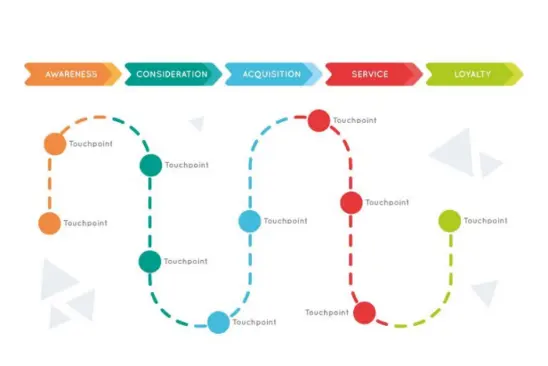
The Salespanel graphic maps the full lifecycle (awareness, consideration, acquisition, service, and loyalty). For SEO planning, though, marketers will more likely work from a simpler model focused on where content does the heavy lifting.
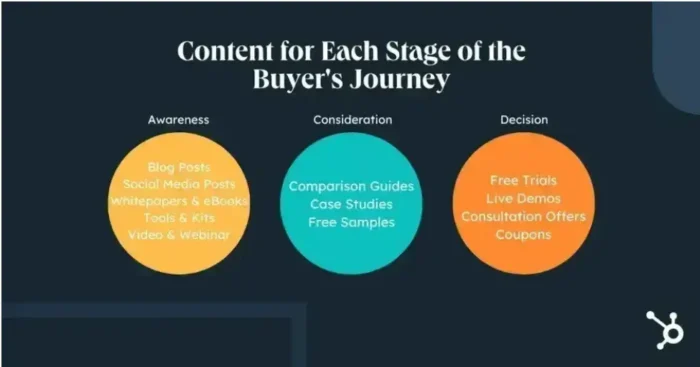
HubSpot’s three-stage framework is a good starting point:
- Awareness: Educational blog posts and guides that answer the problem your tool solves.
- Consideration: Comparison pages, alternative roundups, and integration content that helps buyers shortlist you.
- Decision: Case studies, ROI calculators, and product-led landing pages that close the gap between interest and signup.
Source: https://blog.hubspot.com/marketing/content-for-every-funnel-stage
It’s not just new customers you have to think about, though.
Because SaaS brands use a subscription-based business model, you need to be constantly thinking about how to retain customers. Your B2B SaaS SEO strategy will need to reflect this by creating content that simultaneously attracts new users, educates existing customers, and showcases your authority.
Benefits of SEO for SaaS Businesses
Done well, SEO supports SaaS marketing efforts. It puts you in front of potential customers who are actively seeking what you sell.
The global SaaS market reached $315.7 billion in 2025, is projected to hit $375.6 billion in 2026, and could reach nearly $1.5 trillion by 2034. Capturing even a sliver of that growth means investing in SEO.
If you’re not sold yet, here are more benefits of SEO for SaaS brands:
- Increased brand visibility and credibility. The more your content appears in the search, the more reputable your brand will become. This can be a deciding factor when potential customers are choosing between you and a competitor.
- Scalable traffic. There is a huge compounding factor with SEO. The more content you create and the more links you build, the more your month-on-month traffic will grow.
- Lower-cost acquisition. Putting more effort into your SEO reduces your dependence on paid marketing. As is the case in an industry with high ad costs, anything to alleviate some of that spend will be helpful for SaaS companies.
- Increased product awareness. The more your product shows up in search engines, the easier it will be for your sales team to talk about your product because customers will have probably seen it before.
- Helps to convert prospects from other channels. The SEO content you create is multipurpose and can be used by sales teams to convert prospects from other marketing channels, such as social media and pay-per-click (PPC) ads.
- Improve your user experience. Many SEO tasks also improve user experience, such as optimizing for speed, navigation, and readability. This helps ensure that potential customers stay on your website longer and are more likely to convert.
- Stronger brand health. Organic search data can flag early signs of shifting brand trust or product satisfaction, giving SaaS teams a real-time read on how the market perceives them and a chance to course-correct before issues show up in churn or pipeline.
Regular SEO work also helps you hold on to the rankings you’ve earned. Search engines constantly update their algorithms, so refreshing content and earning new links will keep you ahead of the game.
More and more buyers are searching online for products, too. More than two-thirds (67 percent) of B2B buyers now prefer a rep-free buying experience, and 45 percent say they used AI during a recent purchase. That means you need to appear in search engines and AI Overviews if you want your product on your audience’s shortlist.
SEO also plays well with the B2B industry’s long sales cycles. A single paid ad isn’t going to be enough to keep your prospects on the hook. You need a regular stream of content that showcases your authority and keeps your prospects in your funnel if you want to succeed. Only SEO can achieve that.
Best Practices for Improving Your SaaS SEO Strategy
SEO for SaaS companies takes more than publishing a few blogs and hoping for the best. It succeeds when keyword research, on-page optimization, technical SEO, and off-page authority all work together.
Here’s how to approach each one.
Best Practices for SaaS Keyword Research
Before optimizing your website for SEO, it’s important to do keyword research to identify the terms and phrases potential customers use when searching for your SaaS tool.
Start by creating a list of relevant keywords related to your business and the products or services that you offer. This can include words and phrases related to your software’s features and general topics in your industry.
You’ll also want to choose keywords that map to each phase of the buyer journey. That’s even more important now that AI search favors content that closely matches user intent.
Think beyond the keyword itself. Ask what the searcher is trying to accomplish, then create content that answers that need. The better your content matches intent, the more likely it is to rank in search results and appear in AI-generated answers.
Once you have a shortlist of keywords, use a tool like Ubersuggest to compare their search volume and competition. That will help you prioritize the opportunities with the greatest potential.
For example, searching for “customer data management platform” shows you how often people search for the term and which related keywords are worth exploring next.
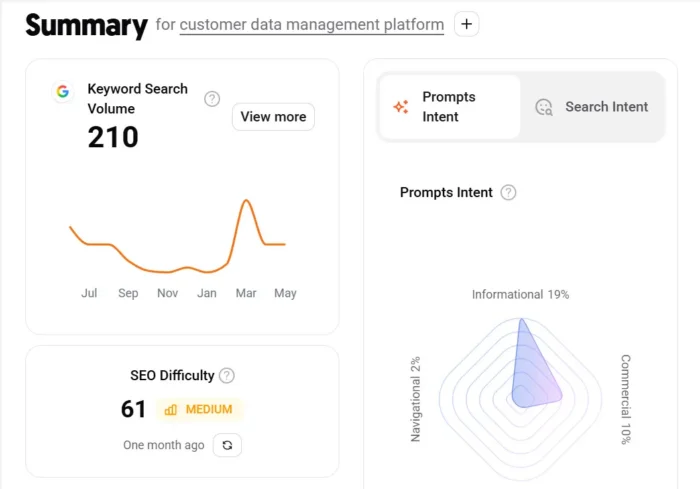
Don’t worry if your initial keyword list is short. SaaS companies often operate in highly specialized, competitive markets where obvious keyword opportunities are limited.
That doesn’t mean the opportunity isn’t there.
First, don’t get hung up on search volume. A keyword that brings in even a dozen visits per month can result in a sale that delivers a return on your investment.
Second, focus on your product’s features and the problems they solve for customers. These kinds of queries may be hyper-specific, but they also tend to have strong purchase intent. You can also create vs. pages that compare your product with your competitors.
Again, these bottom-of-the-funnel keywords are great at driving high-intent traffic.

Source: https://www.rock.so/blog/asana-vs-monday
Third, look at what your competitors are ranking for. Use a tool like Ubersuggest to mine your competitors’ websites and find relevant keywords you can rank for, too.
The more you understand your competitors’ content strategies, the easier it will be to identify gaps you can fill with better, more useful content.
Strong keyword research lays the foundation for every other part of your SaaS SEO strategy.
Best Practices for On-Page SaaS SEO
On-page SEO involves optimizing the pages on your website so they’re easy for both search engines and people to understand.
To improve on-page SEO, start with the fundamentals. Write descriptive page titles and meta descriptions, organize your content with clear headings, optimize your images with descriptive alt text, and add internal links that guide readers to related resources. These elements help search engines understand your content while making it easier for visitors to navigate your site.
The more relevant information you provide on a single page, the better your chances of ranking in the SERPs.
Great on-page SEO, however, starts with the quality of your content. If your page doesn’t answer a searcher’s question better than what’s already ranking, no amount of optimization will make up the difference.
So, what separates great content from average content?
First, it fully addresses the reader’s problem. It goes beyond the basics and answers the follow-up questions they’re likely to have instead of forcing them back to the search results.
Second, it provides an exceptional user experience. It’s well-structured and easy to read, broken into sections with headings, lists, images, and other elements to help users scan and digest information quickly.
This blog post from ClickUp is a good example of clear structure and strong formatting.

Best Practices for Technical SaaS SEO
Technical SEO involves making changes to your website’s back end that are not visible to users but can still have a major impact on search engine visibility.
To optimize your technical SEO, start by optimizing site speed so your pages load quickly. Next, create an XML sitemap and submit it to search engines so they can easily crawl and index your pages.
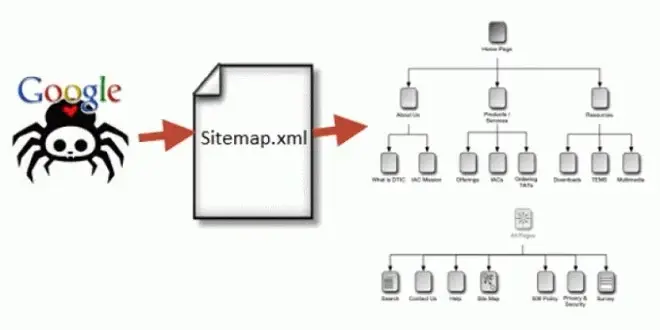
Also, make sure to set up structured data, such as schema markup, to better understand the content on your page and help improve Google rankings. This helps search engines determine what each page is about, which in turn helps them return more relevant results for user queries.
It’s also important that your website is mobile-friendly and works properly on all devices. This will improve the user experience and enhance your chances of ranking in SERPs.
Best Practices for Off-Page SaaS SEO
Off-page SEO builds your website’s authority beyond your own domain. The biggest ranking signal is still high-quality backlinks from trusted, relevant websites that show search engines your content is worth recommending.
Below is an example of Twilio backlinking to SpotHero’s website.
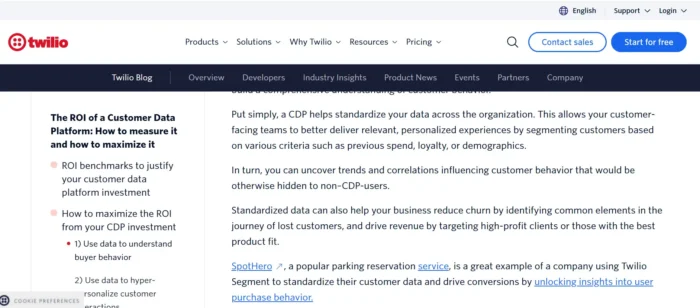
Source: https://www.twilio.com/en-us/blog/insights/data/customer-data-platform-roi
How do you find SaaS link-building opportunities?
One of the easiest ways to find link-building opportunities is to analyze your competitors’ backlink profiles. Tools like Ubersuggest can show you which websites already link to competing SaaS companies, giving you a shortlist of publications and blogs worth targeting.
Here’s an example using Twilio.com:
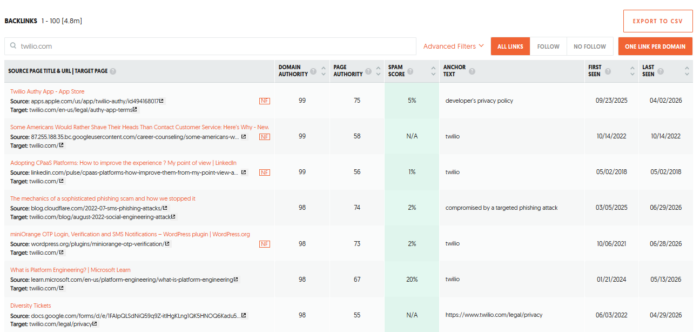
Note: If you click the orange “one link per domain” button, it will remove repeat domains and give you a much more manageable list.
You don’t have to rely on outreach alone, though. Original research, industry surveys, reports, free tools, and useful resources naturally attract links because people want to reference them. Building relationships with industry publications and influencers can amplify that effect even further.
The goal is to earn links from websites your audience already trusts. Those links strengthen your authority and drive qualified referral traffic at the same time.
Creating Your SaaS Strategy: Step By Step
Now that we’ve covered the core pillars of SaaS SEO, it’s time to put them into action. Use the framework below to build a content-based SEO strategy that attracts qualified traffic and supports long-term growth.
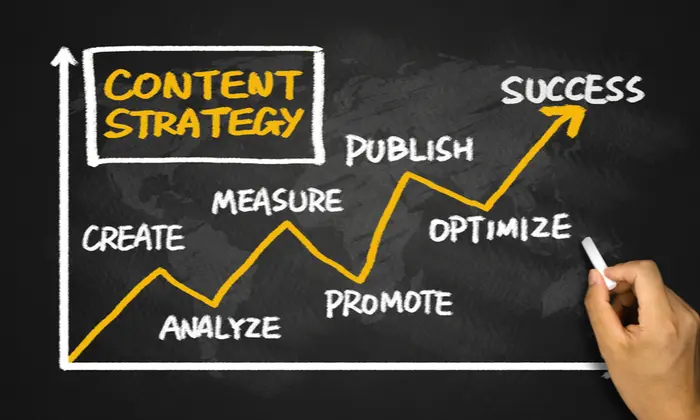
This process breaks down into eight steps:
1. Set Goals and KPIs
Start by defining measurable goals for your SaaS SEO strategy. SaaS companies typically focus on attracting prospective buyers, driving traffic to free demos and converting them into paid users, and educating and retaining current users.
Next, choose the key performance indicators (KPIs) you’ll use to measure success. Track metrics like organic search visibility, keyword rankings, website traffic, and lead generation rate. That way, you’ll know what’s working and where to adjust your strategy as you go.
2. Identify Your Target Audience
Next, determine your target audience. Are they engineers? Marketing operations leaders? Business owners? Knowing who you are targeting helps you create content tailored to their needs.
3. Identify Their Pain Points
Once you know your target audience, focus on their needs and the kind of content they want. Identify topics that are relevant to them and create content that offers value, solves their problems, and answers their questions.
4. Analyze Best-Fitting Keywords
Now it’s time to put your keyword research into action. Use the terms you’ve identified to build content that matches search intent and supports each stage of the buyer journey. Then optimize your titles, headings, body copy, and URLs so search engines can clearly understand what each page is about.
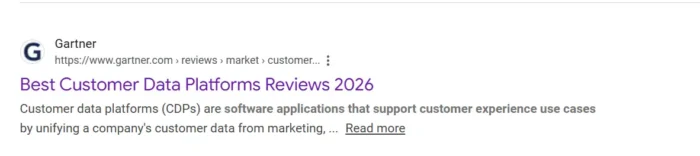
In the example below, Gartner targets the keyword “customer data management platform” consistently across the title, meta description, and URL, reinforcing the page’s relevance for that search.
5. Set Campaign Goals and Tracking Abilities
Now that you’re ready to start creating content, you’ll need to revisit goal-setting on the campaign level. Set measurable goals for each campaign to track performance. You should also establish a tracking system (Use my SEO templates if you’re not sure where to start) to measure the success of each piece of content you produce and make changes accordingly.
6. Produce Content
Create high-quality content that matches search intent and gives readers a reason to choose your page over the competition. Use clear headings, visuals, examples, and other formatting elements to make complex topics easier to scan and understand.
7. Distribute Content
Publishing is only the beginning. Promote your content through your website, email newsletters, social media, and other marketing channels to maximize its reach. Then monitor its performance and refine your approach based on what’s driving traffic and conversions.
8. Monitor Results and Optimize Based on Findings
Your job isn’t over once your content goes live. Regularly optimizing your content based on analytics data can significantly improve your organic search visibility and get closer to achieving your SaaS SEO goals.
Once a year is a good baseline timeframe for content review and refreshing, but ultimately, you should review your traffic and make adjustments based on what’s being read and what’s not.
Successful SaaS SEO Strategies
Looking for inspiration? Here are a few SaaS brands that have built strong organic visibility and the SEO strategies that helped them get there.
Adobe XD
To grow awareness of Adobe XD, its interface design and prototyping software, Adobe created a content-focused community targeting design professionals.

Source: https://www.adobe.com/subscription/xdideasnewsletter.html
With the help of my agency, Adobe created an intent-based content strategy, backed by in-depth keyword, competitive, and content gap research. We also incorporated technical best practices, optimizing page speed, schema markup, and internal linking.
The results? A 648 percent increase in page one rankings and over 25,000 downloads in the first six months, with just under half of all traffic coming from search engines.
Canva
If you want an example of how to improve your SaaS SEO through backlinks, look no further than Canva.
The design platform has created hundreds of backlink magnets through its template pages. Covering everything from letterheads and invoices to coupons and invitations, these pages give users everything they need to create a great-looking design. And this means that websites provide a lot of value to their readers by linking to them.
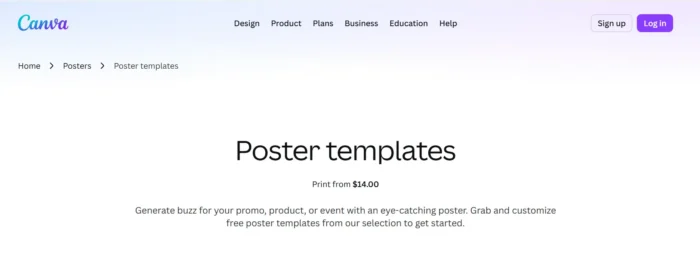
Source: https://www.canva.com/posters/templates/
As a result, Canva has acquired backlinks from highly authoritative domains such as The Next Web, Yahoo, and Thrillist.
But it doesn’t just wait for the links to roll in. Canva engages in personalized outreach to win those backlinks from target websites.
The result?
They have over 25 million backlinks from 280,000 domains and rank for over 5 million keywords, according to Ahrefs.
Smartlook
Product analytics and insights tool Smartlook used a product-focused keyword research strategy to break into the U.S. market and take on established goliaths like Hotjar.
They achieved this via several strategies.
The first was to improve existing landing pages that targeted competitor-style keywords like “Hotjar alternative.” While these pages were well-designed, they lacked sufficient depth of content to rank well on Google. Smartlook added much more information to these pages to better meet searcher intent and created new pages that comprehensively covered each topic.
Cisco has since acquired Smartlook and continues to operate as part of its portfolio, but the SEO strategy remains just as relevant today. Building comprehensive comparison pages around high-intent keywords is still an effective way for SaaS companies to capture buyers evaluating their options.
Verint
A clear example of what a strong SaaS SEO strategy can achieve is our work with Verint, a customer experience software company serving more than 9,800 brands across 175 countries.
As Verint prepared for a major website migration, including multiple blog and acquired business unit migrations, the challenge was preserving existing rankings while growing non-branded organic traffic in a highly competitive market.
We partnered with Verint’s product and marketing teams to build an SEO strategy around the migration. That included technical fixes for Core Web Vitals, mapping redirects, and content audits using our 6Rs framework to determine what content should be reformatted, repurposed, refreshed, retired, redirected, or simply remain as is.
The broader strategy also incorporated localization for global markets and a digital PR initiative to strengthen domain authority.

Source: https://www.verint.com/blog/
Within 30 days of launch, Verint achieved a:
- 210 percent increase in non-branded organic search clicks year over year
- 33 percent increase in keywords ranking in positions one through 10
- 32 percent increase in total organic search clicks year-over-year
The results show what’s possible with a coordinated SaaS SEO program.
SaaS and AI Search
AI search has become a fixture in the SaaS buyer journey. Prospects who used to start with a Google search are now asking ChatGPT to compare tools, prompting Perplexity for vendor shortlists or scanning Google’s AI Overviews before clicking anywhere.
According to G2’s 2026 AI Search Insight Report, 51 percent of B2B software buyers now start their software research with an AI chatbot more often than with Google, and 71 percent rely on AI chatbots somewhere in the research process.
For SaaS marketers, this changes what visibility means. Ranking on page one still matters, but getting cited inside an AI answer matters, too.
If a buyer asks ChatGPT for the best project management tool for remote teams and your product isn’t mentioned, you’ve lost the discovery moment entirely. The same G2 research found that 69 percent of buyers reported AI chatbots surfaced information that led them to choose a different vendor than expected.
To keep your audience engaged, your SaaS SEO strategy should now account for:
- Clear, well-structured content that LLMs can parse and pull from with confidence.
- Strong E-E-A-T signals like author bylines, original data, and expert quotes that build trust with both search engines and AI tools.
- Presence on trusted third-party sites such as G2, Capterra, and respected industry publications. A recent SE Ranking study found that sites with profiles on review platforms like G2, Capterra, and Trustpilot were three times more likely to be cited by ChatGPT.
- Branded content that defines your category so your name surfaces when buyers ask about the problem you solve.
FAQs
What is SaaS SEO?
SaaS SEO is the practice of optimizing a software-as-a-service company’s website to rank higher in search engines for keywords that matter to its buyers. It accounts for the industry’s specific nuances, such as long sales cycles and a subscription-based revenue model.
How important is SEO in a SaaS business?
SEO is one of the highest-leverage growth channels available to SaaS companies. It compounds over time, lowers your dependence on paid acquisition, and meets buyers where they’re already researching solutions. With B2B’s stretched-out sales cycles, a steady stream of search-visible content can keep prospects engaged from first touch to close.
How SaaS companies improve their SEO?
Start with a technical audit to fix page speed and indexing issues. Then build topic clusters that map to each stage of the buyer journey, target bottom-funnel terms like comparisons and alternatives, and earn authority through digital PR and third-party reviews on G2 and Capterra.
What’s more important, a SaaS content strategy or SEO strategy?
They aren’t competing approaches. Your content strategy defines what you publish and why, and your SEO strategy ensures that content gets found. The strongest SaaS programs treat them as a single integrated effort, where keyword research informs content topics, and content quality drives rankings and conversions.
How do I combine SEO and PPC for SaaS lead generation?
Use PPC to capture high-intent commercial queries while SEO builds long-term authority on informational and comparison terms. Share keyword data between teams to identify which paid terms convert well enough to warrant organic investment, and use retargeting to re-engage organic visitors who didn’t convert on the first visit.
{
“@context”: “https://schema.org”,
“@type”: “FAQPage”,
“mainEntity”: [
{
“@type”: “Question”,
“name”: “What is SaaS SEO?”,
“acceptedAnswer”: {
“@type”: “Answer”,
“text”: “
SaaS SEO is the practice of optimizing a software-as-a-service company’s website to rank higher in search engines for keywords that matter to its buyers. It accounts for the industry’s specific nuances, such as long sales cycles and a subscription-based revenue model.
”
}
}
, {
“@type”: “Question”,
“name”: “How important is SEO in a SaaS business?”,
“acceptedAnswer”: {
“@type”: “Answer”,
“text”: “
SEO is one of the highest-leverage growth channels available to SaaS companies. It compounds over time, lowers your dependence on paid acquisition, and meets buyers where they’re already researching solutions. With B2B’s stretched-out sales cycles, a steady stream of search-visible content can keep prospects engaged from first touch to close.
”
}
}
, {
“@type”: “Question”,
“name”: “How SaaS companies improve their SEO?”,
“acceptedAnswer”: {
“@type”: “Answer”,
“text”: “
Start with a technical audit to fix page speed and indexing issues. Then build topic clusters that map to each stage of the buyer journey, target bottom-funnel terms like comparisons and alternatives, and earn authority through digital PR and third-party reviews on G2 and Capterra.
”
}
}
, {
“@type”: “Question”,
“name”: “What’s more important, a SaaS content strategy or SEO strategy?”,
“acceptedAnswer”: {
“@type”: “Answer”,
“text”: “
They aren’t competing approaches. Your content strategy defines what you publish and why, and your SEO strategy ensures that content gets found. The strongest SaaS programs treat them as a single integrated effort, where keyword research informs content topics, and content quality drives rankings and conversions.
”
}
}
, {
“@type”: “Question”,
“name”: “How do I combine SEO and PPC for SaaS lead generation?”,
“acceptedAnswer”: {
“@type”: “Answer”,
“text”: “
Use PPC to capture high-intent commercial queries while SEO builds long-term authority on informational and comparison terms. Share keyword data between teams to identify which paid terms convert well enough to warrant organic investment, and use retargeting to re-engage organic visitors who didn’t convert on the first visit.
”
}
}
]
}
Conclusion
SaaS SEO is one of the most effective ways to attract qualified buyers throughout the customer journey. The stronger your strategy, the more opportunities you’ll have to build awareness and convert prospects into long-term customers.
Optimizing your SaaS website starts with a content strategy tailored to your target audience. That means researching relevant keywords and creating high-quality content that appeals to both users and search engines.
While your industry may be more technical than others, following the advice in this SaaS SEO guide will help you achieve better organic search visibility and get closer to your goals.
At the same time, search itself is changing.
AI tools like ChatGPT and Claude are changing how buyers discover software, while Google’s AI Overviews are reshaping what visibility looks like on the SERP.
The SaaS brands that win going forward will be the ones building content for both traditional search and AI answers, while mapping every piece to a real stage in the buyer journey
⚡ Hot Amazon & Walmart Deals
Discover exclusive discounts from Amazon and Walmart – shop trending products and save big today.
🎮 MMO & AI Tools – Earn Online Smarter
Join the MMO community and explore powerful AI tools designed to maximize your online income.
💼 Affitor Pro & AI Side Hustles
Leverage AI to generate smarter profits and build sustainable passive income streams.
🚀 Hosting & Tutorials
Learn how to build profitable websites fast with Hostinger tutorials and AI‑powered strategies.